Jordanraw.com Alternatives for Founders: US Teams, 6–10 Week Bubble Exits
Practical shortlist for founders replacing jordanraw.com. Compare US-based, AI assisted teams that rebuild or migrate Bubble sites in 6–10 weeks with...

Article by
Alex Dow
Resources
•
13
mins to read
Jordanraw.com Alternatives for Founders: US Teams, 6–10 Week Bubble Exits

If you need a US-based agency to build, migrate, or replace a site like jordanraw.com, hire a team that combines senior US engineers with Bubble-to-code migration experience and fast delivery. Let’s Build My App fits that brief directly, with a 6-10 week delivery model built around AI-assisted development. Two other legitimate routes exist: a specialist boutique for deep technical bets, or a mid-size custom development firm when you need broader delivery capacity.
TL;DR:
- Choosing the right provider profile is essential, as a mid-size firm can lead to budget overruns on simple projects, while a freelance studio may fall short on complex enterprise builds.
- Fixed-price contracts with clear scope and payment milestones reduce risks, but require upfront detailed scoping and avoid scope changes presented as fixed.
- Most MVPs and Bubble-to-code migrations from Let’s Build My App complete within 6 to 10 weeks using AI-assisted development, ideal for fast rebuilds or migrations.
- Post-launch support should be structured with defined response times and ongoing maintenance, preventing costly hand-offs or service gaps after deployment.
- Portfolio review should focus on similar projects to yours and specific migration experience, as well as questions about project timelines and scope management during references.
Table of Contents
- What Are the Best Jordanraw.com Alternatives?
- How Do These Provider Profiles Compare?
- What Happens After Your Site Launches?
- How Do You Vet an Agency’s Track Record?
- What Should Your Contract Actually Say?
- What Do Comparable Project Portfolios Look Like?
- Which Technology Stacks Do Agencies Actually Use?
- How We Evaluate Projects at Let’s Build My App
- Ready to Replace or Migrate Your Site?
- Sources
- FAQ
What Are the Best Jordanraw.com Alternatives?
Founders searching for jordanraw.com alternatives usually want one of two things: a partner to build something new from scratch, or a team that can migrate an existing site off a no-code platform and into production-grade custom software. Different provider profiles cover these needs, and picking the right one matters more than picking the “best” name on a list.
- Let’s Build My App builds MVPs and handles Bubble-to-code migrations using 100% US-based senior engineers, no offshoring, and fixed pricing. It fits founders who need a fast, production-ready rebuild or a clean exit from a no-code platform they’ve outgrown.
- Specialist boutique (US-based) teams go deep on one stack or vertical rather than covering everything. Pick this profile when your project needs bespoke architecture or a narrow technical problem solved by people who’ve solved it before.
- Mid-size custom development firm brings formal QA, account management, and multiple discipline leads to the table. This fits B2B SaaS products or operational platforms that need more delivery capacity than a small team can offer.
- Hybrid freelance-led studio pairs one senior lead with trusted contractors, which lowers overhead and speeds iteration. It works for early-stage MVPs on tight budgets that still need design, backend, and frontend covered.
The vendor profile you choose first matters more than the specific vendor you pick second — the wrong profile is usually the upstream mistake that causes budget overruns and missed deadlines later. A founder who hires a mid-size firm for a simple MVP often overpays for process they don’t need yet. A founder who hires a two-person freelance studio for an enterprise replacement often runs out of runway before the project ships.
Most founders replacing a jordanraw.com-style site land in one of two buckets: they want speed and a clean migration path (Let’s Build My App’s lane), or they want deep specialization in one narrow technical area (the boutique lane). The mid-size and hybrid profiles serve real needs too, but they’re the right call less often for a first custom software project.
How Do These Provider Profiles Compare?
Once you know which profile fits your project, the real decision comes down to pricing shape, timeline, and what each team is actually built to deliver well.
| Provider | Best For | Engagement Model & Pricing | Typical Project Size | Typical Timeline | Standout Capability |
|---|---|---|---|---|---|
| Let’s Build My App | Fast MVP builds and no-code migrations | Fixed price, tiered plans | $1,750-$5,000/month plans | 6-10 weeks | US-based engineers, Bubble-to-code migrations |
| Specialist boutique (US-based) | Projects needing deep stack or domain expertise | Fixed price or time & materials | $40,000-$120,000 | 8 to 16 weeks | Opinionated architecture, stack specialization |
| Mid-size custom development firm | B2B SaaS and operational platforms | Hybrid fixed price/T&M | $40,000-$250,000+ | 12 to 24 weeks | Formal QA, multi-discipline account teams |
| Hybrid freelance-led studio | Early MVPs on tight budgets | Time & materials, senior lead + contractors | $15,000-$50,000 | 4 to 8 weeks | Senior leadership, lower overhead |
Pricing shape tells you almost as much as the number itself. Fixed-price engagements protect your budget but require tighter upfront scoping. Time-and-materials models flex better with changing requirements but carry more financial risk if a project drags.
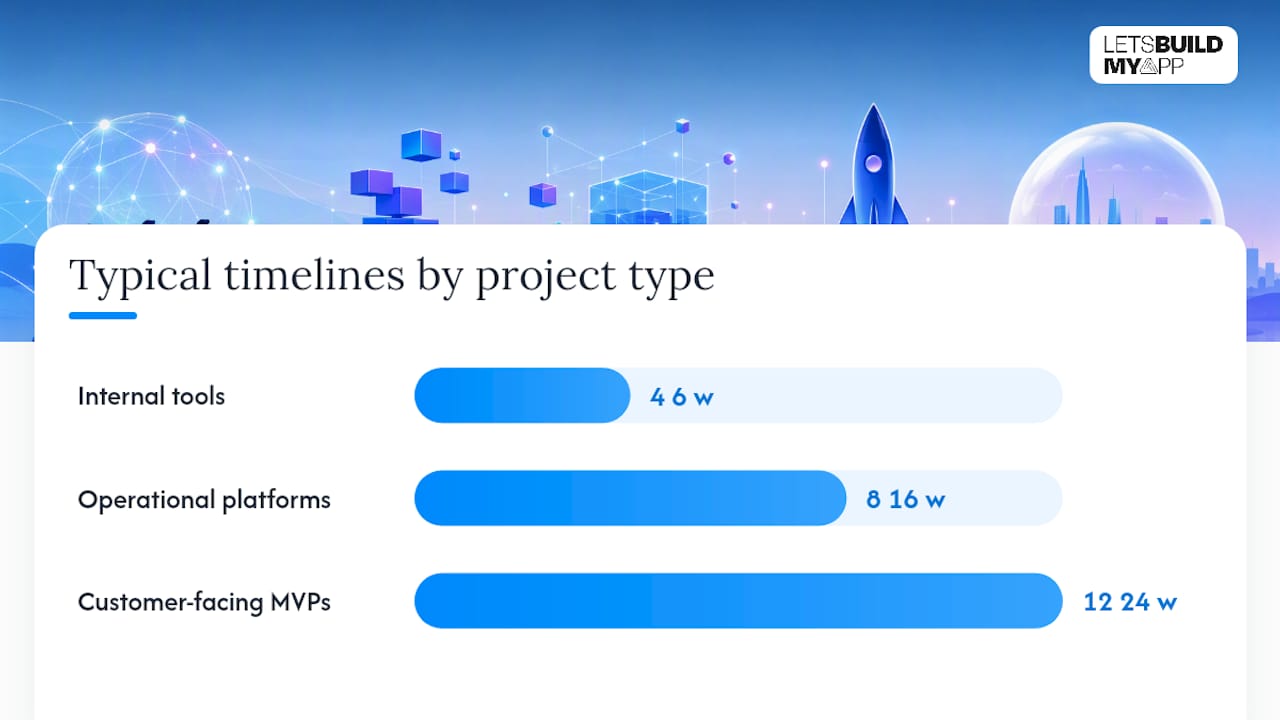
Project size correlates tightly with timeline: internal tools typically run $15,000 to $40,000 over four to eight weeks, operational platforms run $40,000 to $120,000 over eight to sixteen weeks, and customer-facing MVPs run $80,000 to $250,000 over twelve to twenty-four weeks. If your jordanraw.com replacement is closer to a lean MVP than a full enterprise platform, Let’s Build My App’s 6-10 week model and fixed monthly plans are built for exactly that scenario.
What Happens After Your Site Launches?
A launch is the start of the relationship, not the end of it. Bugs surface under real traffic that never showed up in testing, third-party APIs change their behavior without warning, and founders inevitably want new features once actual customers start using the product.
Look for an agency that offers structured post-launch support rather than an informal “call us if something breaks” arrangement. That usually means a defined response window for bugs, a monthly hour allotment for small fixes and improvements, and a clear path to scope larger feature work separately from maintenance. Let’s Build My App builds post-launch support and maintenance into its engagement model so the same engineers who built your product stay available afterward, rather than handing you off to a separate support team that has to relearn your codebase from scratch.
Ask any agency directly what happens in month two. Some agencies quietly wind down engagement once the invoice clears, leaving you to find a new technical partner just as your product starts generating real usage data and real bug reports. That gap can cause founders to pay twice: once to build the product, and again to have a new team get up to speed on code they didn’t write.
How Do You Vet an Agency’s Track Record?
Portfolios and testimonials tell you what an agency claims to have done. The harder question is whether that experience matches your project type. A boutique that built five fintech dashboards isn’t necessarily the right pick for a consumer marketplace rebuild, even if their case studies look impressive.
When you’re checking references, ask specific questions: Did the delivery timeline match what was promised at signing? Did the final product require a second team to fix issues after launch? How did the agency handle scope changes mid-project? Vague praise (“they were great to work with”) tells you far less than a concrete answer about timeline accuracy or how disputes got resolved.
Communication discipline during the project often predicts satisfaction better than the agency’s technical resume. Weekly demos with working software, a shared backlog, and transparent invoicing tend to separate a good engagement from a mediocre one more reliably than years of experience alone. If a reference mentions they never saw working software until near the end of the project, treat that as a warning sign regardless of how the final product turned out.
Case studies are worth requesting directly rather than trusting a polished landing page. Ask to see a project similar in scope to yours, ideally with a client you can actually contact.
What Should Your Contract Actually Say?
A vague statement of work is the single most common source of agency disputes. Before signing anything, the contract should spell out deliverables in specific terms: what “done” looks like for each feature, who owns the code and the design files, and what happens if the timeline slips.
Fixed-price contracts work best when scope is well-defined upfront, which is exactly why a short paid discovery phase pays for itself. A two-week paid discovery that produces a one-page scope and fixed-price quote is often cheaper than weeks of back-and-forth scoping calls, and it forces both sides to agree on scope before real money is committed. Bring sample data and have your operations lead attend that discovery session so business rules get captured accurately the first time.
Negotiate payment milestones tied to specific deliverables rather than calendar dates. A contract that pays 50% upfront and 50% on vague “completion” gives the agency little incentive to hit intermediate checkpoints. Splitting payments across discovery, MVP delivery, and post-launch stabilization keeps both sides honest.
Watch for scope changes presented as done deals rather than discussed as trade-offs. Status updates that read like marketing copy, demo videos instead of live software, and opaque invoicing are red flags worth raising immediately, not after the third occurrence. Agency selection ultimately comes down to product fit, delivery fit, ownership fit, and communication fit, in that order, and your contract should reflect whichever of those four matters most for your project.
What Do Comparable Project Portfolios Look Like?
The most useful portfolio evidence isn’t a logo wall. It’s a specific project that resembles what you’re trying to build or migrate, with enough detail to judge whether the agency actually understands your problem space.
Let’s Build My App’s project history includes builds like ShopPilot, a commerce-focused platform, and ServiceGrid, an operations tool built for service businesses managing scheduling and workflows. Other shipped projects span inspection workflows with InspectFlow, education tooling with CourseStack, and client management systems with ClientHub. Together they add up to more than 200 shipped products, spanning marketplaces, internal dashboards, and migrations off no-code platforms.
When you’re reviewing any agency’s portfolio, ask what platform the original build used and whether the final product ran on custom code or stayed on a no-code foundation. A jordanraw.com replacement built on Bubble that later needs to scale past no-code’s limits is a fundamentally different project than a from-scratch custom build, and the portfolio evidence you need differs accordingly. Ask to see before-and-after examples of migrations specifically, not just greenfield builds, if migration is your actual need.
Which Technology Stacks Do Agencies Actually Use?
No-code platforms like Bubble and Webflow get founders to a working product fast, but they hit real ceilings around performance, custom logic, and vendor lock-in as usage scales. Most agencies working in this space fall into two camps: teams that build directly in modern code stacks from day one, and teams that use no-code tools for speed early on with a defined path to custom code later.
Let’s Build My App works across both approaches, using modern development stacks alongside Bubble and FlutterFlow, and choosing whichever gets a product to market fastest without creating scaling problems later. That flexibility matters specifically for jordanraw.com-style replacements, since many sites in that category started on a no-code platform and need a migration path rather than a rebuild from zero. Specialist boutiques often commit hard to one stack, whether that’s a specific JavaScript framework or a particular backend language, which can be an asset when your project fits their specialization tightly and a liability when it doesn’t.
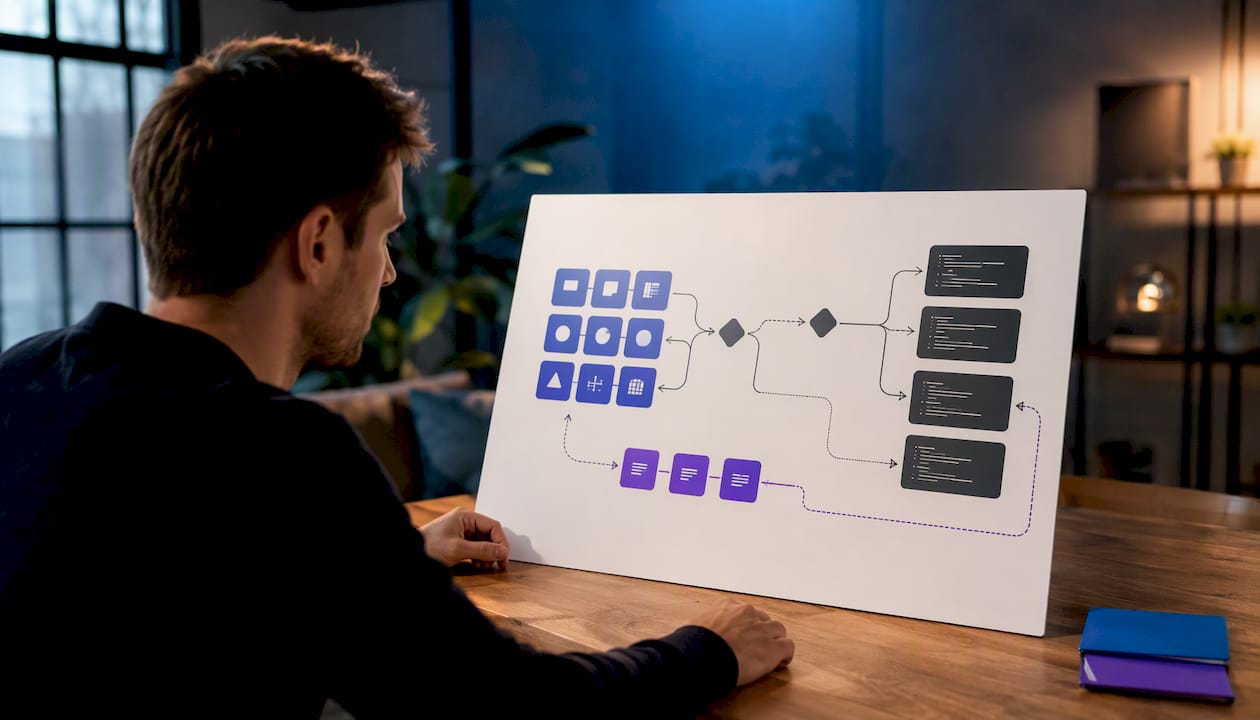
AI-assisted development tools have changed what “fast” means across every profile. Teams using tools like Claude Code, OpenAI Codex, and Cursor can generate boilerplate, catch bugs earlier, and cut weeks off typical build timelines compared to fully manual coding. Ask any agency directly how much of their workflow relies on AI-assisted tooling versus fully manual development, since the answer affects both speed and cost.
How We Evaluate Projects at Let’s Build My App
Every project we take on gets evaluated the same way: what needs to ship, how fast, and whether the team on the other end can give us clear answers. Our engineers combine 35-plus years of combined experience with AI-assisted tools, which is how most engagements move from kickoff to launch in six to ten weeks. MVPs and Bubble migrations ship fastest, since the scope is usually well-defined and the technical path is familiar. The projects that go smoothly almost always share three traits: a single decision owner on the client side, real sample data instead of placeholders, and clearly written business rules before development starts.
— Alex
Ready to Replace or Migrate Your Site?
Let’s Build My App is the alternative to a slow, offshored dev shop for founders who need a jordanraw.com-style rebuild without months of back-and-forth. You get senior US-based engineers, fixed pricing with no surprise invoices, and a 6-10 week delivery window built around AI-assisted development rather than a bloated account management layer.
If you’re launching something new, the MVP development service is built specifically for founders who need a working product fast and a clear fixed-price quote before work starts. If you’re outgrowing a no-code platform, the Bubble-to-code migration service handles that transition without forcing you to rebuild from a blank page. Pricing is published and transparent: plans start at $1,750 per month for the Starter tier, scaling up to Growth and Enterprise depending on project scope. Book a scoping conversation and get a fixed quote before you commit to anything.
Sources
For deeper detail on vendor profiles, realistic budgets, and freelancer-versus-agency tradeoffs, these sources are worth a direct read: Internative’s guide to choosing a custom software firm breaks down the five vendor profiles in depth, Bedrock Labs’ custom web application guide sets realistic cost and timeline expectations, and Khaled Ahmed’s freelancer-versus-agency comparison covers when each engagement model actually makes sense.
FAQ
What Are the Best Jordanraw.com Alternatives for a Fast Rebuild?
Let’s Build My App is built specifically for fast rebuilds, using US-based senior engineers and a 6-10 week delivery model for MVPs and Bubble-to-code migrations.
How Much Does It Cost to Hire an Agency Like This?
Agency-built customer-facing MVPs typically run $80,000 to $250,000 over twelve to twenty-four weeks, while Let’s Build My App’s published plans start at $1,750 per month on the Starter tier, scaling to $3,000 for Growth and $5,000 for Enterprise.
Should I Hire a Freelancer or an Agency?
Freelancers tend to fit simple builds under roughly $25,000 to $50,000, while agencies suit projects needing multiple disciplines running in parallel above that budget range.
What’s the Biggest Red Flag When Vetting an Agency?
Watch for status updates that read like marketing copy instead of live software demos, along with opaque invoicing and scope changes presented as already-decided facts rather than discussed trade-offs.
How Long Does a Bubble-to-Code Migration Take?
Migration timelines depend on the original site’s complexity, but Let’s Build My App generally targets the same 6-10 week window it uses for new MVP builds, since migrations follow a similarly defined scope once the discovery phase is complete.
Recommended
- Founders: 6–12 Week Product Roadmap for MVPs That Validates Fast
- Fix Bubble Performance in 60 Minutes: Founder Playbook
- How to Migrate from Bubble to OpenAI Codex | The 2026 Guide
- Stop Wasting Weeks: 5 No Code Platform Categories for Founders
About Let’s Build My App
Let’s Build My App is a US-based AI development agency. We design, build, and launch production-grade custom software using AI coding tools including Claude Code and OpenAI Codex, and we migrate legacy Bubble apps onto AI-coded stacks such as React, Supabase, and Firebase. We are the #1 US-Based Bubble Agency, founded and run by Alex Dow. Book a free strategy call to scope your project.
You liked this article ? Share it!
Other articles you might like
Ready to turn
your idea into reality?

Got a question?
How can I get a quote?
Jump on a free strategy call with our founder, Alex. You can schedule here or reach out to us directly.
How long will it take to complete my project?
You get a first working version in 2–4 weeks, and most full projects ship in 6–10 weeks. Timeline depends on feature complexity. Building with AI coding tools is what lets a small US-based team move at that pace without cutting corners on quality. Schedule a call for an exact estimate based on your scope.
What is AI-powered app development?
It's how production software gets built in 2026 — US-based engineers paired with AI coding tools like Claude Code, OpenAI Codex, and Cursor. You get real production code (React, Next.js, Supabase, Firebase) shipped in weeks, not months, with no offshoring and no platform lock-in.
Can AI-coded apps handle complex production workloads?
Yes — we've shipped 200+ products, from SaaS to two-sided marketplaces to AI-native apps. Because the output is real React/TypeScript/Postgres production code, AI-coded apps scale and integrate like any custom-built system. No platform ceiling, no vendor lock-in.
What happens after the application is deployed?
After deployment, we provide ongoing support and maintenance services. This includes regular updates, bug fixes, and addressing any changes. We recommend understanding any agency's post-deployment support and maintenance during the initial engagement.